
A successful Los Angeles bathroom remodel starts with the parts you will not see after the tile is installed. Waterproofing, drainage, ventilation, and a workable layout determine how well the room performs long after the fixtures are new. Whether you are updating a compact bathroom in Encino or a primary suite in Tarzana, define those decisions before choosing finishes. This guide explains what to discuss with your remodeling contractor and where a property-specific assessment matters.
Start with the problems your bathroom needs to solve
List the everyday frustrations first: a cramped entry, limited storage, a shower that is difficult to step into, or moisture that lingers after use. Measure the room and note door swings, window locations, and the position of existing fixtures. Keeping plumbing in place may reduce relocation work, but it should not preserve a layout that does not meet your household's needs.
Discuss future accessibility as part of the design. A wider circulation area, reachable controls, and planned blocking for grab bars can be easier to incorporate while walls are open. A curbless shower is not simply a shower without a threshold: floor depth, drainage, waterproofing, and adjacent surfaces all need coordination. Ask whether the existing structure can support the proposed design before treating it as a straightforward fixture change.
Treat the shower as a complete waterproofing system
Tile and grout are finish materials, not a complete waterproof barrier. Ask your contractor to identify the proposed waterproofing assembly and explain how its components work together. The shower base, drain connection, wall transitions, corners, niches, and penetrations all need compatible details. Installation should follow the selected system's instructions and applicable requirements rather than mixing products without checking compatibility.
- Identify the shower-base and wall-waterproofing products in the written scope.
- Confirm how the drain connection, curb or curbless entry, and niche will be detailed.
- Ask how the shower floor will be formed so water drains instead of pooling.
- Agree on required inspections and any testing before the assembly is covered.
- Request progress photographs of concealed work for your project records.
If demolition reveals moisture damage or deteriorated framing, pause to assess the cause and agree on repairs before covering the area. Replacing stained tile without correcting the source of water intrusion can leave the underlying problem unresolved. Include a written change-order process so unexpected conditions do not become undocumented decisions.
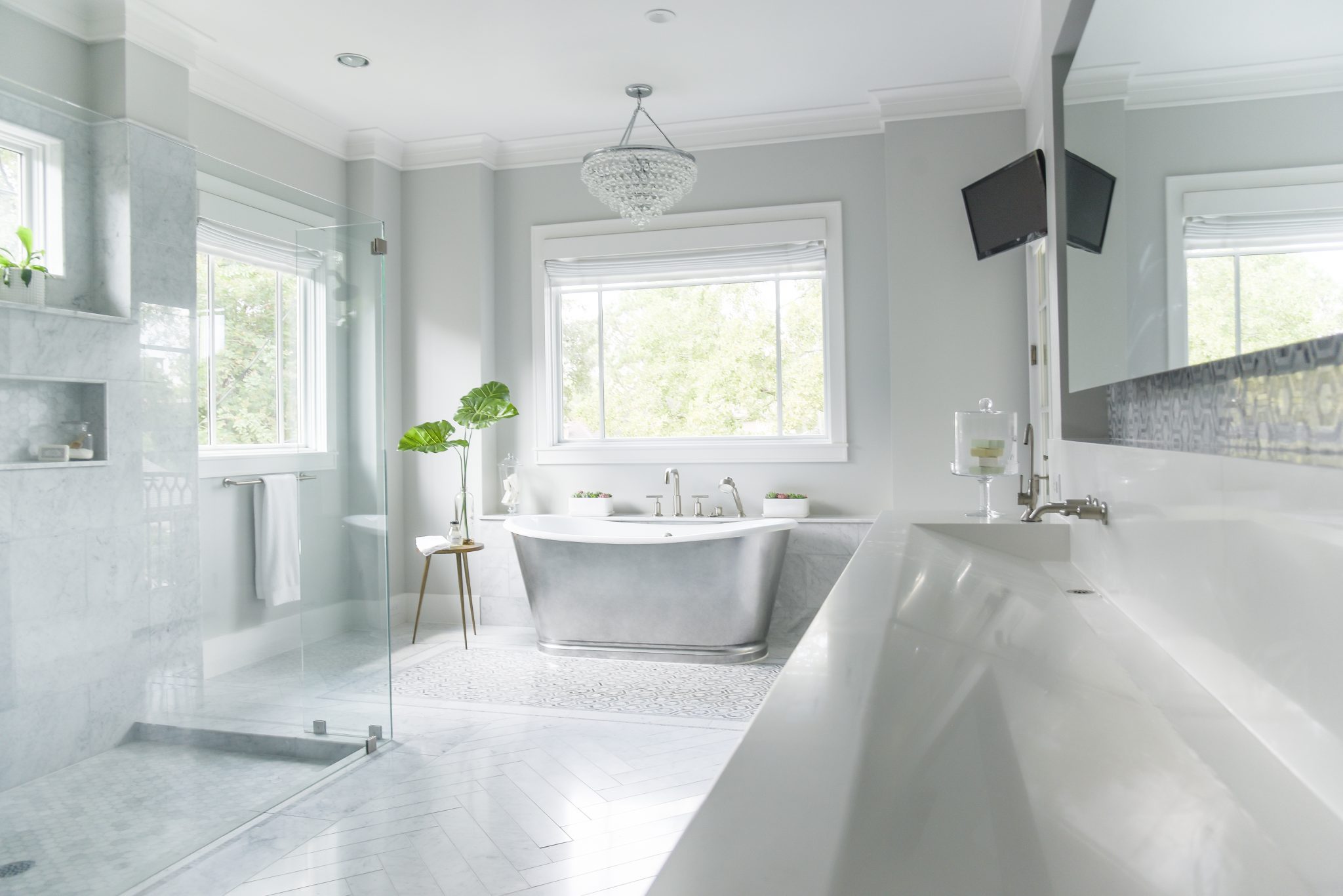
Plan ventilation, lighting, and electrical work together
Los Angeles may have a relatively dry climate, but a shower still introduces moisture into an enclosed room. Discuss a properly sized exhaust fan, an appropriate route to the outdoors, and controls that make regular use convenient. Ask how the installation will meet the requirements for your project; a nearby window alone should not be assumed to settle the ventilation design.
Coordinate vanity lighting, shower-rated fixtures where needed, switches, receptacles, and any proposed heated flooring before walls are closed. If you are adding equipment, have the electrical scope and available capacity reviewed. Good task lighting at the mirror and accessible controls are more useful than selecting decorative fixtures without a complete plan.
Choose materials for maintenance as well as appearance
Compare flooring for wet-area suitability, cleaning needs, and slip resistance rather than color alone. Check the manufacturer's intended use for each product. Large tiles can reduce grout lines, but shower-floor geometry and drainage may favor a different format. Natural stone may require more care than an alternative with a similar appearance, so review the maintenance instructions before ordering.
Select faucets, shower valves, accessories, and vanity dimensions early enough to coordinate rough plumbing and blocking. Consider water-efficient fixtures that meet applicable requirements, but verify compatibility and comfort rather than assuming every product performs the same way. Keep a record of model numbers, finishes, and approved substitutions so the estimate and installation refer to the same selections.
Confirm permits and the construction sequence for your address
Tarzana and Encino are within the City of Los Angeles, while nearby incorporated cities and unincorporated county areas may use different building departments. Confirm the authority responsible for your address and describe the actual scope, including plumbing, electrical, ventilation, and structural changes. Do not assume that every bathroom update has the same permit or inspection requirements.
- 1Approve the layout and written scope, including selections, allowances, and exclusions.
- 2Resolve required plans, permits, procurement, and the household's bathroom-access plan.
- 3Complete demolition and assess concealed conditions before proceeding.
- 4Coordinate rough work, required inspections, waterproofing, and testing before finishes.
- 5Install finishes and fixtures, check operation, and complete required final approvals and a punch list.
Bathroom-remodel questions from Los Angeles homeowners
- 1
Does new tile make a shower waterproof?
No. Tile and grout are finishes. The shower needs a coordinated waterproofing assembly behind or beneath those finishes, with correctly detailed transitions and drain connections.
- 2
Can I replace a tub with a curbless shower?
It may be possible, but floor structure, drainage, waterproofing, and layout must be evaluated. Ask for a property-specific design rather than assuming it is a direct replacement.
- 3
Should I keep the bathroom's existing plumbing locations?
Keeping them may limit relocation work, but compare that benefit with access, storage, and usability. Existing plumbing may still need repairs or updates.
- 4
How long will my bathroom be unavailable?
That depends on the scope, inspections, material availability, and concealed conditions. Request a project-specific sequence and arrange an alternative bathroom before demolition.
Resources for your bathroom-remodel plan
City of Los Angeles: plan review and permitting
Explore our bathroom-remodeling services
Browse bathroom ideas in our project gallery
Bring photos, room measurements, your priorities, and any known leak history to your first consultation. Green Home Remodeling serves greater Los Angeles from Tarzana. This guide is general planning information, not a fixed-price estimate, a site inspection, or a determination of your property's code requirements.